
When does an ageing transformer become an asset decision?
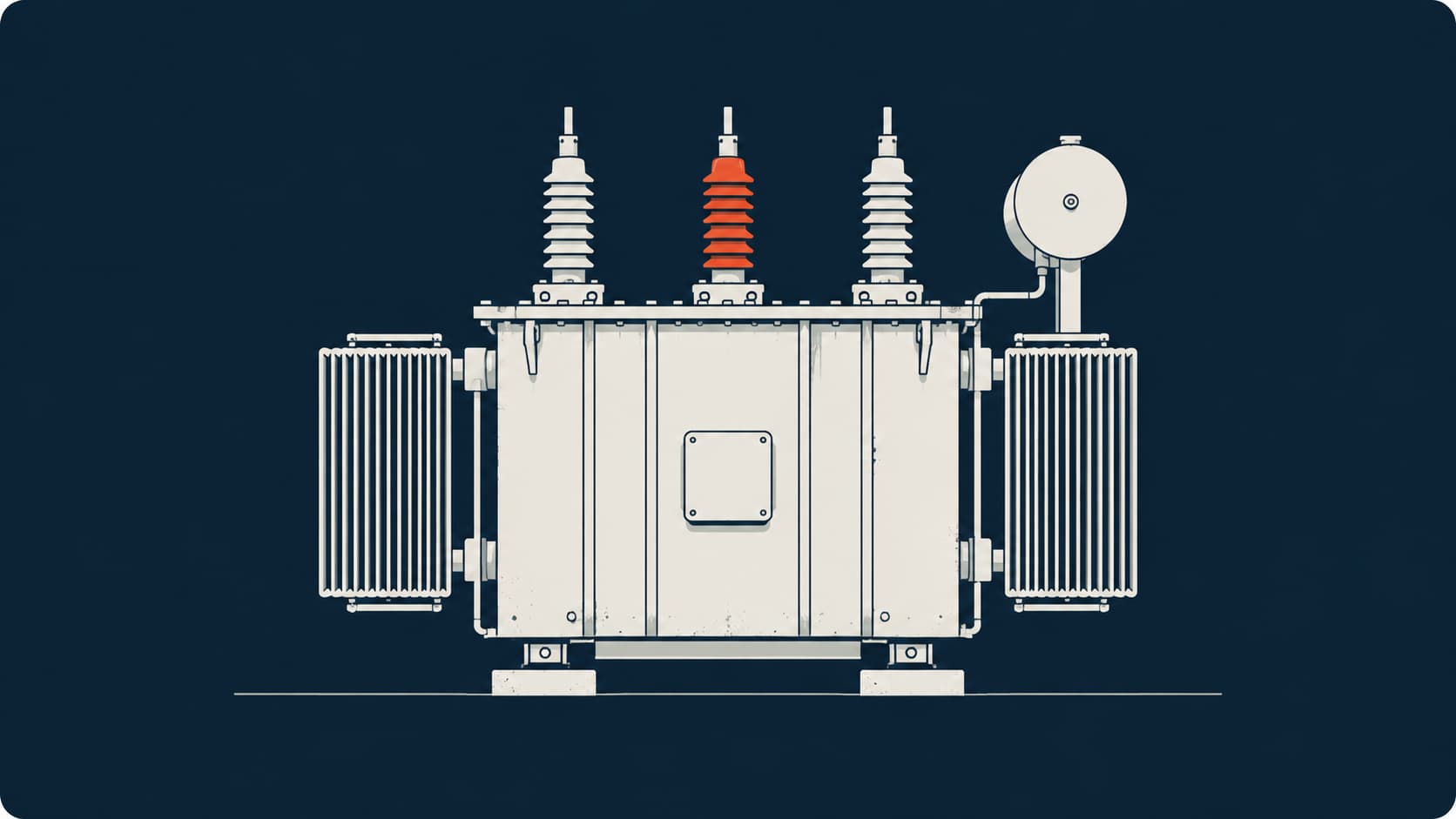
Almost every site with private HV infrastructure has at least one transformer that predates most of the people responsible for it. Thirty years is common. Forty is not unusual. The unit is running, nothing has failed, and every year it stays on the asset register unexamined.
At some point someone asks whether it should be replaced. The honest answer is that the year on the rating plate is not what decides it.
Age is a prompt, not a reason
A well-specified transformer that has been lightly loaded, kept dry, kept cool and maintained properly can outlast a younger unit that has been run hard in a poor environment. Age tells you to look. It does not tell you what you will find.
What matters is the answer to five questions.
What does the condition evidence actually say?
Condition assessment can draw on oil analysis, electrical testing, thermography, visual inspection and maintenance history, and which of these apply depends on the transformer and the circumstances. Oil sampling is often a useful starting point on an oil-filled unit, since gas content, moisture and acidity can indicate possible deterioration or developing fault conditions inside a tank nobody can see into. No single test settles the question on its own. A trend across several assessments usually tells you more than an isolated result, which is an argument for starting to build a record now rather than commissioning one test when a decision is already overdue.
Can it still be supported?
Availability of spares, of compatible switchgear, of protection relays, and of anyone who still works on that design. An asset in fine condition can still be the wrong asset to keep if a failure means a twelve-week wait for a component nobody stocks.
Does it match what the site now does?
Load profiles drift. Sites add plant, add refrigeration, add charging infrastructure, take on a tenant, change shift patterns. A transformer sized correctly in 1994 may now be running closer to its limit than anyone has checked, or may be substantially oversized because a process was decommissioned. Both cases carry a cost.
What does it cost to run?
Older units generally carry higher no-load losses than current designs, and no-load losses are present every hour the unit is energised. Whether that difference is material depends entirely on the specific unit, its loading and what you pay per unit of electricity. It is worth calculating properly against your own figures rather than assuming it is either significant or negligible.
What happens if it fails?
This is the question that usually decides it. An unplanned failure is not only the replacement cost. It is lead time on a unit that may not be on a shelf, plus outage planning, plus whatever the site loses while it is down. For some sites that is an inconvenience. For others it is the entire operation.
Putting it to the people who hold the budget
A replacement case that rests on age will struggle, and should. A case built on the five questions above is a different proposition, because it answers the question finance is actually asking: what is the risk of doing nothing, and what does removing it cost?
In practice, six headings carry that conversation:
-
- Condition. What the evidence shows, and over what period.
-
- Supportability. Spares, compatibility, and realistic replacement lead time if it fails.
-
- Operational consequence. What the site loses during an unplanned outage, in hours and in output.
-
- Options. Monitor, test further, hold a spare, plan a replacement, replace now.
-
- Cost. For each option, including the cost of continuing as you are.
-
- Recommended timing. When to act, and what determines that date.
Kept to a page, that structure travels into a budget meeting without needing an electrical engineer to interpret it. It also opens the middle ground. The options are not only “keep it” and “replace it now”. Enhanced monitoring, a planned replacement in a defined window, a holding spare, or bringing the work forward to coincide with an outage already scheduled for another reason may all be better answers.
Where to start
If you do not currently have condition data on your HV plant, that is the first job rather than a quotation. We can tell you what the existing records support, what testing would establish and, where the case is there, what a replacement would realistically involve. Where the evidence says keep it, we will say that too.
Two examples of how that plays out in practice: a transformer oil replacement, where intervention extended the life of the existing unit, and a 1000kVA asset replacement, where it did not.
If the question arrived via a maintenance report rather than a budget cycle, it may be worth starting with what happens after an issue is identified on an HV network.