
There is more than one route through an HV connection project
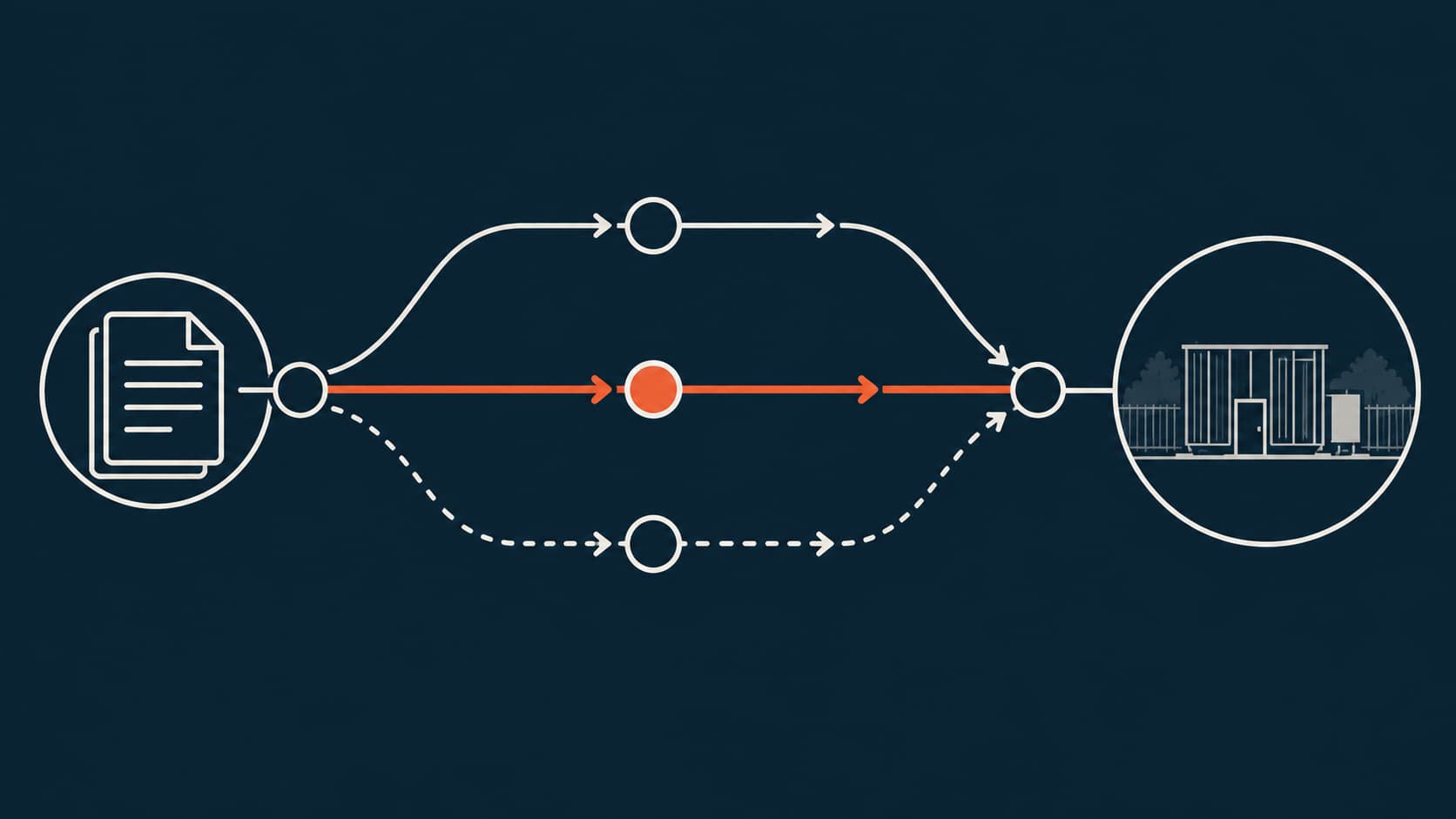
A site needs a new connection, or more capacity than the existing one provides. The application goes to the distribution network operator, a connection offer comes back with a figure and a date, and the project is planned around both.
For a large number of projects that is the whole decision, made in an afternoon, on the reasonable assumption that the organisation which owns the network is the only organisation that can connect you to it.
That assumption is worth examining, because parts of the work are open to other providers, and the choice affects cost, programme and how many suppliers you end up coordinating.
Three terms worth knowing
Contestable works are the parts of a connection project that can be carried out by a provider other than the network operator. In many projects this covers a significant share of the physical construction, and the elements most often involved are excavation and ducting, cable installation, substation civils and the installation of equipment.
Non-contestable works are the parts that stay with the network operator. What falls into this category is set by the framework the operator works within rather than by the contractor.
Which activities sit on which side of that line is not fixed across all projects. It depends on the connection, the network, and the operator’s requirements for that particular scheme, and it is established through the connection process rather than assumed at the outset.
An ICP, or Independent Connections Provider, is a contractor accredited to carry out contestable works. Accreditation is held under the National Electricity Registration Scheme, which covers the specific activities each ICP is registered to perform, so it is worth checking that a provider’s registration covers the work your project involves.
The terminology is unhelpful, but the underlying idea is simple. Some of the work is open to competition. Some of it is not. You have a choice about the open part, and the first thing to establish on any given project is how much of it that is.
What the choice actually changes
Where an ICP carries out the contestable works, three things tend to shift.
The programme becomes partly yours. The construction element runs to a programme you agree with a contractor rather than sitting in an operator’s queue. The non-contestable elements still run to the operator’s timescales, so this is not a route around the network operator, but it does move a significant portion of the work into a programme you can influence.
The commercial arrangement is negotiable. Payment terms, staging and scope can be discussed, rather than being fixed by a standard offer.
The number of interfaces changes. Bringing more of the contestable scope under one contractor reduces the number of supplier interfaces the project team has to coordinate, and with it the number of points where responsibility can fall between parties. That matters most where the connection sits on the critical path for the wider project.
What does not change
The network operator remains involved throughout, and this is worth being precise about rather than glossing over.
The point of connection, the available capacity and the technical requirements are determined by the operator. Work that will be adopted onto their network has to be built to their standards and accepted by them. Any reinforcement of the wider network sits with them. Approval and acceptance timescales are theirs.
No ICP controls those decisions or those dates. What a competent one does is submit complete information early, deal with the operator on your behalf, and build realistic durations into the programme rather than optimistic ones. Any supplier implying they can compress an operator’s approval process is describing something outside their control.
Where ESE sits
ESE holds NERS accreditation and works as an ICP on connection projects, and holds an authorisation from Northern Powergrid relating to connections onto their network.
On a connection in that area, that allows us to cover a wider share of the route than a contractor working alongside the operator on the contestable elements alone, taking in design, civils, substation construction, installation and testing, with maintenance available afterwards. The operator stays involved where their framework requires it.
What to compare before you commit
Whichever route you take, the comparison is the same set of questions, and a connection offer is easier to assess against them than on cost alone:
-
- Scope. What is included, and what will need to be procured separately.
-
- Dependencies. Which activities remain with the network operator regardless of who else is involved.
-
- Programme. Which dates you can influence and which you cannot, and what each stage is waiting on.
-
- Commercial structure. Payment terms and staging, and how much is required before work starts.
-
- Interfaces. How many separate suppliers the project team ends up coordinating.
-
- Responsibility. Who is accountable for getting the connection through to energisation, rather than through to their own package boundary.
Whether it is the right route for you
Sometimes it is not. Where the works are small, where the network operator’s programme already suits your dates, or where the contestable element is minor, the standard route can be the sensible one.
The point is that it should be a decision rather than a default. If you are holding a connection offer and are not certain which parts of it are open to competition, that is a straightforward conversation and one we are happy to have before you commit.
Once the route is settled, the next set of questions is about delivery. Those are covered in what needs to be resolved before an HV installation reaches site.