
What needs to be resolved before an HV installation reaches site?
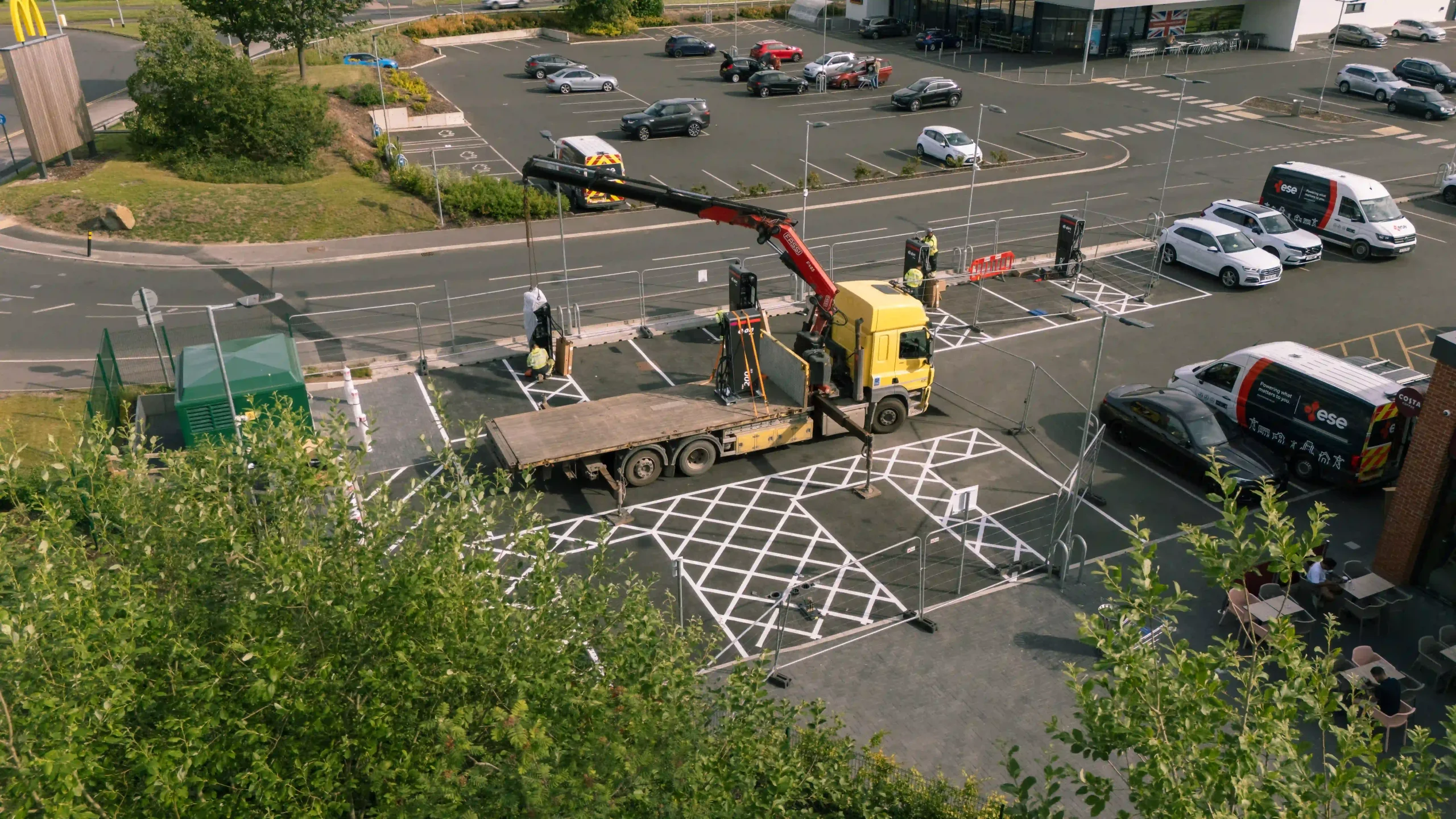
Many of the problems that surface during an HV installation originate months earlier, in the gaps between a design that was issued, a quotation that was priced and a programme that was agreed. The gaps are rarely visible until the works start.
By then they are expensive. A question that costs an email in February costs a standing crew and a missed energisation date in September.
Here is what is worth closing out first.
A scope boundary that both parties would describe the same way
Not “HV works” but the specific list: who digs, who supplies ducts, who lays them, who provides and pours the base, who supplies the transformer, who terminates, who provides the LV connection to the panel, who tests, who commissions, who provides the documentation. Most package disputes originate in three or four items that each party assumed the other had.
Exclusions written where they can be seen
An exclusion buried in a quotation’s final paragraph is a commercial position, not a clarification. Estimators pricing a wider bid need them stated clearly enough to be carried into the tender, because an exclusion that surfaces after the bid has been submitted becomes the contractor’s problem rather than the specialist’s.
Whatever depends on the network operator
New connections, capacity variations, metering, protection settings and final live connections all involve the DNO, and those timescales run on the operator’s programme rather than yours. What can be managed is applying early, submitting complete information, and building realistic durations into the plan. What cannot be managed is the operator’s decision date. Any supplier suggesting otherwise is describing something they do not control.
Civils, sequenced against the electrical works
Excavation, ducting, bases, fencing and access roads dictate when electrical installation can begin, and they are sensitive to ground conditions, drainage, existing services and weather. Where civils and electrical delivery sit with separate contractors under separate programmes, the interface needs an owner. Where they sit with one, that is one fewer conversation to hold.
Access, outage windows and site constraints
Confirmed by the people who own them. Live sites have restrictions: operational hours, shutdown periods, permit systems, crane positions, delivery routes, headroom, weight limits on the route in. These are best established on a site visit rather than from a drawing, and they frequently change the method.
Equipment lead times, measured against the date they are needed
Transformers, switchgear and protection can carry long and variable lead times. The date that matters is not the order date but the date the unit needs to be in position, working backwards through delivery, offload and installation.
Everything the design still assumes
Most designs at tender contain assumptions about load, fault level, earthing arrangement, cable routes or existing infrastructure. They are reasonable working assumptions, and some of them will be wrong. Listing them and agreeing who confirms each one turns a late surprise into a scheduled task.
Who holds the programme
Where design, civils, equipment supply, installation, testing and energisation sit with different parties, someone has to hold the sequence and see the dependencies between them. If that role has not been assigned, it defaults to the project owner, usually at the worst moment.
Why this is worth the time
None of this is complicated. It is just easier to defer, because at pre-construction stage the questions feel premature and everyone is busy.
The mechanism is simple enough. Resolving these items early reduces the number of unresolved interfaces carried into construction. Leaving them open means they surface later, at the point where labour, equipment or an energisation date is already waiting on the answer, which is the most expensive moment to find out.
Raising them at tender stage can make a proposal look more complicated than one that does not. That is the trade, and it is usually worth making.
Where the project involves a new connection or additional capacity, one of the earliest decisions is which route to take through it. That is covered in there is more than one route through an HV connection project.
If you are at design or tender stage and want a second opinion on where the gaps in an HV package sit, we will look at it and tell you what we would want confirmed.