

The new year is when a lot of site plans start to move. A new building gets the go-ahead, a production line is approved, or a long-discussed change finally gets a budget.
Many of those plans need more electricity than the site uses today. And the electrical side is often one of the last things to be looked at, once the drawings are done and the dates are set.
That’s usually later than it should be. If something you’re planning for next year might need more power, the time to start thinking about it is now, while the plans can still take the answer into account.
What kinds of changes can mean a site needs more power?
Some are obvious. Others creep up because they don’t look like electrical projects at first. Common examples include:
- New buildings or extensions, from a new teaching block to a warehouse extension
- New machinery or production lines, especially larger or more power-hungry equipment
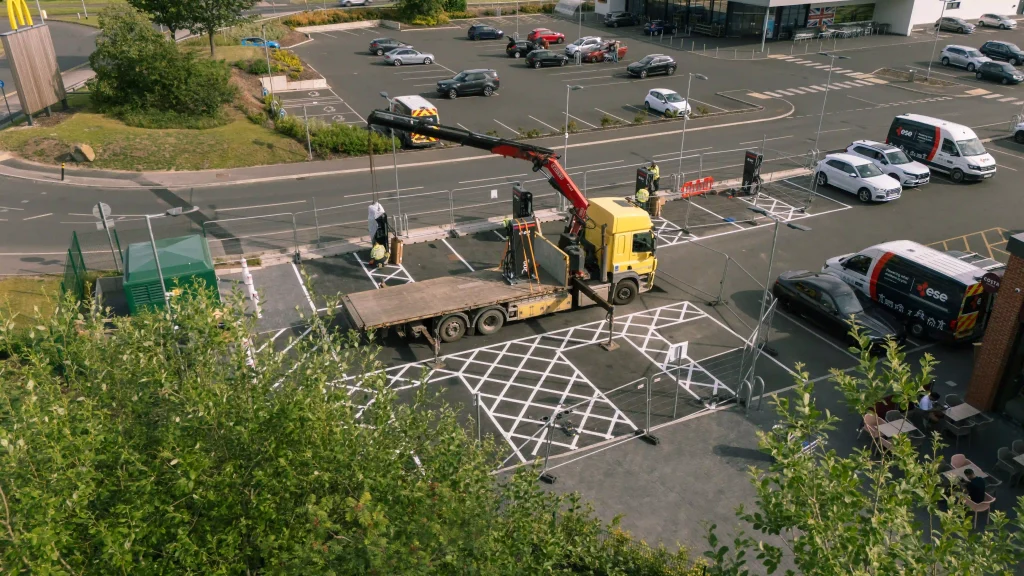
- EV charging, for fleet vehicles, staff or visitors, which can add up quickly as the number of chargers grows
- Moving away from gas, such as replacing gas boilers with heat pumps or electric heating
- More cooling or IT, such as a bigger server room or air conditioning added to existing space
- A change of use, where a building is turned over to something that draws more power than before
It’s also worth thinking about smaller changes together. Each one might be modest, but several in the same year can add up to more than the site has available.
Does the site have the capacity it needs?
This is the first question to answer, and it’s often less straightforward than it sounds. It isn’t just about how much power the site uses now. It’s about how much it can use, and where.
The early questions are:
- How much extra power will the plans need? Even a rough figure from the project team or equipment supplier is a useful start.
- How much does the site’s current supply allow, and how close does the site already come to it at its busiest?
- Can the site’s own HV network carry the extra load to where it’s needed? A site might have enough supply overall, but not on the right part of the network.
- Is the existing equipment able to take it? Transformers, switchgear and cables all have limits, and some may need upgrading or adding to.
Sometimes the answer is that the site already has room, perhaps with some changes to its own network. Sometimes it means more is needed from outside the site. Either way, it’s far better to know early.
If it does turn out that the site needs a new or bigger connection, our article on connection routes and how we work on the network explains the options.
Who should be involved, and when?
On many projects, the people planning the change and the people who look after the site’s HV don’t talk until late on. Bringing them together early saves a lot of rework.
The people worth involving include:
- whoever is leading the project, whether that’s an internal team, an architect or a project manager
- the site or facilities manager, who knows how the site runs and what’s already planned
- your HV contractor or Authorised Person, who knows the site’s network, its condition and its limits
- the equipment or system suppliers, who can say how much power their kit actually needs
- finance, so any electrical costs are in the budget from the start rather than added later
As for when: as soon as the plan is firm enough to describe, even if the detail isn’t settled. “We’re thinking about adding EV chargers to the main car park” is enough to start a useful conversation. You don’t need finished drawings to ask whether the site can cope.
Why does early HV advice avoid surprises?
When the electrical side is looked at late, the problems tend to be the expensive kind:
- The design has to change. A new building in the wrong place for the existing network, or with no room for the equipment it needs, can mean redrawing plans that were thought to be finished.
- The budget grows. Upgrades to transformers, switchgear or cabling that nobody allowed for arrive as a late extra.
- The dates slip. Electrical work that needs a shutdown, new equipment or outside involvement doesn’t always fit the project’s timetable once it’s fixed.
That last point matters most where the site needs more supply from outside. The network operator’s part of the work follows its own process and its own timetable, which neither the site nor its contractor controls. Knowing early that they’ll be involved gives the project the best chance to plan around it, rather than discover it at the end.
Looked at early, the same questions are just part of the design. The answers shape where things go, what goes in the budget and when the work fits, and there’s room to compare options rather than accept whatever is left.
Talk to us about next year
If you’ve got plans for next year that might need more power, even if they’re still at an early stage, we’d be glad to talk them through. We can help you understand what your site’s network can take today, what might need to change, and who should be involved, so the electrical side is part of the plan from the start rather than a surprise at the end.